Foods of the World
Fermented foods
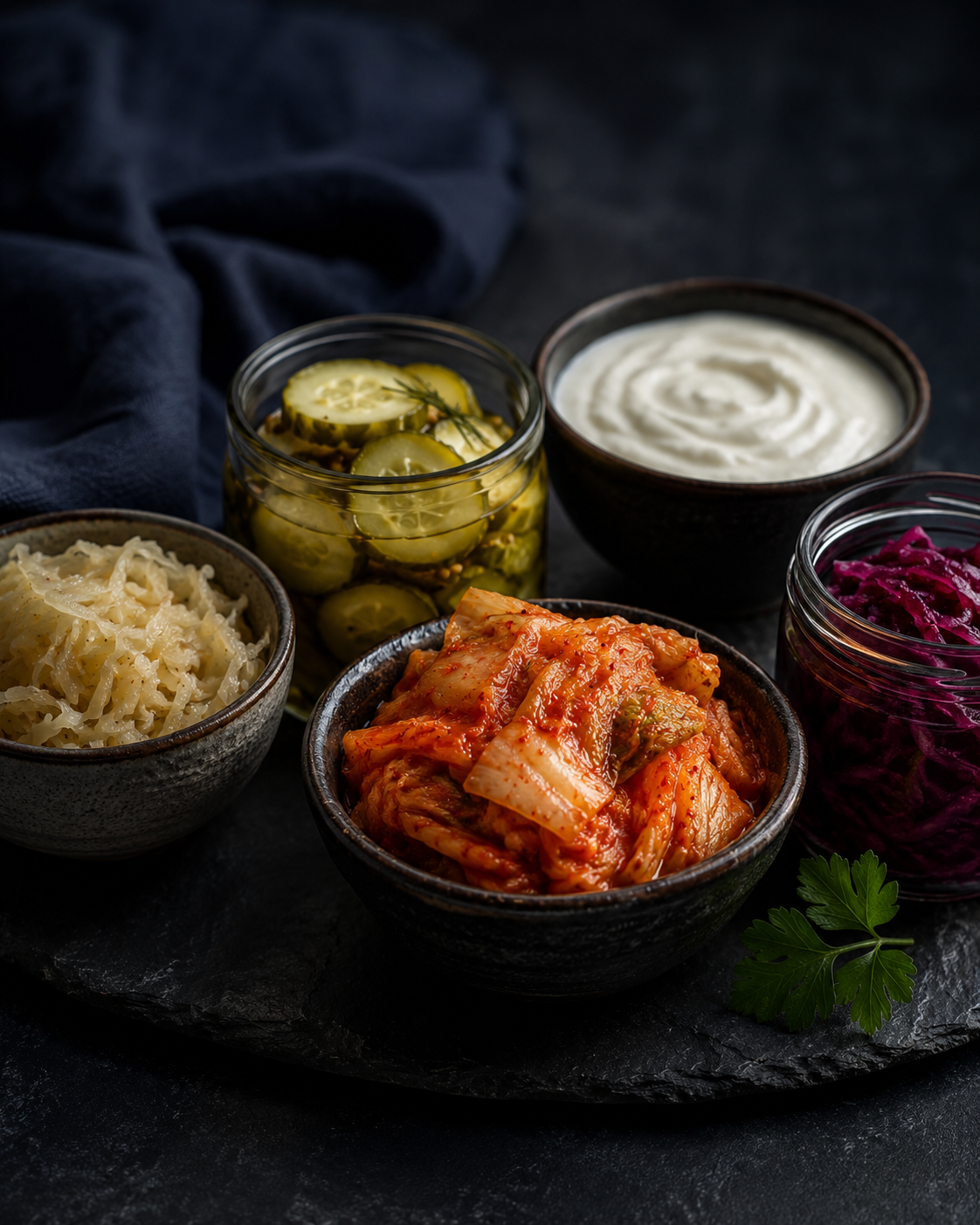
Traditional foods such as pickled vegetables, cultured dairy, sauces, and preserved staples. MetClock uses them as possible timing anchors inside a real food routine.
What it is
Traditional foods such as pickled vegetables, cultured dairy, sauces, and preserved staples.
Where it appears in world food traditions
Fermented foods appear in Korean, Japanese, German, Eastern European, Latin American, African, and many other food traditions as pickles, cultured dairy, vegetables, sauces, and preserved foods.
Why it matters in MetClock
Fermented foods can add flavor structure and cultural familiarity when tolerance is clear.
How to combine them without overthinking it
Pair them with protein, rice, legumes, eggs, greens, or simple meals that need brightness.
How to use it
Use small amounts as flavor anchors, sides, or meal accents when they already fit your food preferences.
When it fits in your day
They usually fit inside meals, not as a forced daily ritual.
Grocery tips that protect the routine
Start with familiar options and check ingredients, sodium, and tolerance before making them routine.
Example MetClock protocol
- Morning: first hydration or simple signal.
- Meal window: anchor with protein, fiber, or flavor depending on the food.
- Afternoon: movement reset or drink anchor if useful.
- Evening: recovery boundary and groceries ready for the next day.
FAQ
Are fermented foods required in MetClock?
No. MetClock considers it only when it fits your preferences, tolerance, budget, and routine.
Is this medical advice?
No. MetClock is not medical advice. It is a lifestyle timing system.
When can fermented foods fit in the day?
They may fit as a morning, main-meal, hydration, or recovery anchor depending on the food and your real schedule.
MetClock is not medical advice. It is a lifestyle timing system.